

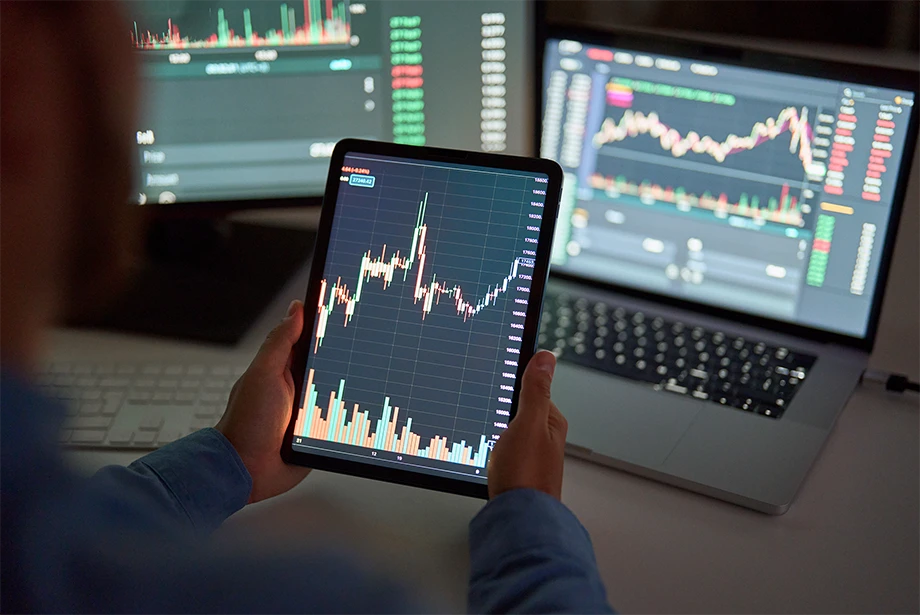
Learning how to trade forex without any local economic context produces a particular kind of trader: technically capable but poorly attuned to the forces that actually drive the markets they operate in. Retail traders who ground their understanding of currency in the economic cycles relevant to their home country work from a more coherent framework than those who rely solely on international course material that treats every market as interchangeable.
The movement of the peso across a calendar year can be explained by forces that are deeply familiar to Mexican traders. Remittance inflows follow predictable seasonal peaks tied to the calendars of the communities sending and receiving dollars, and those peaks can have measurable effects on domestic dollar supply at specific times of year. This dynamic rarely appears in standard international forex courses, but traders who integrate that awareness into their analysis are working with information that carries genuine market relevance.
A similar pattern appears in connection with tourism flows, which traders in certain regions of Mexico can observe directly. Exchange rate conditions in destinations such as Cancún, Los Cabos, and Puerto Vallarta follow a predictable seasonal pattern tied to dollar inflows during peak tourism periods. A trader in those communities who understands how the local economy absorbs and distributes foreign currency has an intuitive grasp of demand dynamics that more abstractly positioned analysts may lack. That grounded awareness does not replace technical analysis but adds a layer of context that sharpens how chart signals are interpreted.
Election cycles have historically been among the most instructive events for traders to study. The connection between domestic political uncertainty and currency volatility is well established, and Mexican retail participants who have traded through significant election periods understand that sentiment can drive exchange rate movements that macro fundamentals alone would not predict. Generic forex tutorials rarely address the political calendar awareness that becomes essential when sizing positions and managing exposure during high-uncertainty periods, and that gap is one that Mexican traders must fill through their own experience and observation.
The impact of U.S. corporate earnings seasons on investor appetite for risk and dollar demand trickles down to the peso. Major American publications have a sway on sentiment with regard to risk belongings, and this activity seems to be seeping into emerging market currencies, whether retailers are actively trading to US equities or not, though in Mexico the impact is lesser. As traders become familiar with those transmission mechanisms, they will be better equipped to predict peso moves that could otherwise be unrelated to what’s going on domestically.
Traders who want a full picture of the forces at play on the Mexican currency should factor in commodity price cycles. As a significant oil producer, Mexico’s fiscal position is sensitive to energy prices, which in turn shapes expectations around government revenue and investor attitudes toward Mexican assets. A trader who follows energy markets alongside the peso is more likely to understand the interaction between asset classes than one who approaches how to trade forex as an isolated analytical exercise.
This depth is what separates consistently successful Mexican traders from those who have plateaued at technical competence. Any quality educational source can convey the skills needed to engage with currency markets, but the ability to place those skills within Mexico’s economic rhythms and develop that situational awareness as an analytical advantage is something no generic curriculum provides, and which Mexican traders ultimately have to build for themselves by paying attention to the world around them.